Commercial Waste Epping: Building an Eco-Friendly Waste Disposal Area
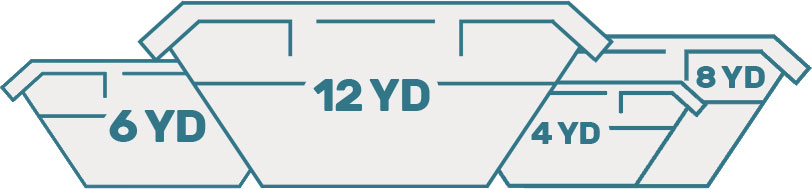 Commercial Waste Epping is evolving to meet the needs of businesses that demand a more sustainable rubbish area and a truly eco-friendly waste disposal area. Our local approach balances practical collection with long-term environmental goals, focusing on waste separation, reuse and low-carbon logistics. This page outlines our recycling percentage target, how we use nearby transfer stations, partnerships with charities for reuse, and the deployment of low-carbon vans to reduce emissions from commercial waste collection.
Across the town and surrounding boroughs, the emphasis on commercial waste in Epping includes encouraging the same source-separation principles adopted by local authorities: separate containers for dry recyclables, glass, food waste and garden waste. By aligning services with the borough’s approach to waste separation, businesses can access consistent collection streams that improve material quality and increase the amount of material sent for recycling or reuse rather than disposal.
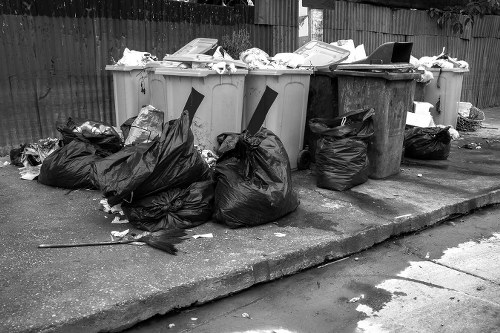 To demonstrate ambition, our current recycling percentage target for Epping’s commercial sector is to reach 70% recycling and reuse by 2030. This target covers both diversion from landfill and recovery through reuse. It drives investments in segregation practices at the point of production, improved transfer and sorting, and collaborative programmes with local partners to keep valuable resources in circulation.
How Local Transfer Stations and Regional Facilities Support Recycling
Commercial rubbish collection in Epping interfaces with several nearby transfer stations and material recovery facilities across Essex and Greater London. These regional transfer stations act as consolidation points where commercial loads are bulked, separated further, and directed to the most appropriate recycling or processing streams. Using these facilities efficiently helps reduce double handling and keeps the carbon footprint of the commercial waste Epping chain lower.
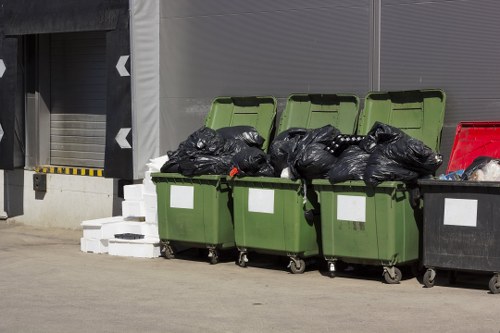 Many businesses benefit from scheduled direct deliveries to transfer stations or dedicated commercial MRF (Material Recovery Facility) routes that prioritise high-quality dry recycling and organics processing. The proximity of these transfer facilities to Epping enables quicker turnaround times and supports specialised processing, such as separate food waste anaerobic digestion and glass cullet recovery, which are essential to a thriving sustainable rubbish area.
Key operational measures that support transfer-station-led recycling include:
- Route consolidation to reduce vehicle mileage
- Pre-sorting at business premises to improve stream quality
- Timely communication with transfer stations to prioritise high-volume commercial loads
Partnerships with Charities and Reuse Organisations
Part of creating a sustainable rubbish area in Epping is maximising reuse before recycling. We work with local and national charities, furniture reuse schemes and community shops to redirect bulky items, working equipment and surplus stock into reuse channels. These partnerships reduce waste disposal, support community causes and contribute to the recycling percentage target by keeping functional items out of the waste stream.
 Typical charity and reuse collaborations include donation collections for:
- Furniture and appliances handled by certified reuse charities
- Office equipment and IT hardware sent to refurbishment programmes
- Food surplus redirected to local food banks and community kitchens
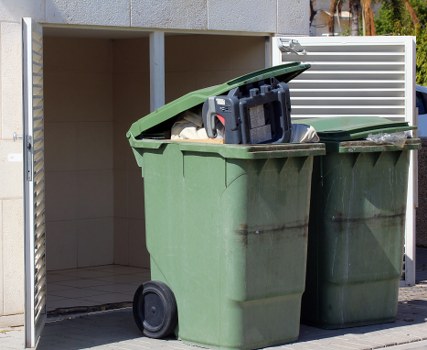 Through these links, Epping commercial recycling achieves a higher rate of material recovery and amplifies social value — converting potential waste into resources and supporting local households and charities. Strong partnerships are central to transforming commercial waste handling into a circular economy activity rather than a simple disposal cost.
Decarbonising collections is another pillar of the eco-friendly waste disposal strategy. Our fleet strategy prioritises low-carbon vans and alternative fuel vehicles for all local commercial collections. Deploying electric and hybrid vans, along with route optimisation software, significantly reduces tailpipe emissions in the town centre and industrial areas. This approach not only supports climate commitments but also improves air quality in high-activity commercial zones.
Operational commitments to a lower-carbon commercial waste service include:
- Gradual replacement of diesel vans with electric and hybrid vehicles
- Use of telematics for real-time route optimisation
- Scheduled consolidation at transfer stations to reduce vehicle movements
By combining vehicle electrification with smarter logistics, the commercial waste Epping network can reduce emissions per tonne collected and support long-term sustainability goals while maintaining reliable service for businesses.
The move toward a sustainable rubbish area in Epping also promotes specific recycling activities relevant to the local context: commercial food waste collections for anaerobic digestion, glass separation for high-quality cullet recovery, and dedicated routes for bulky commercial items that are suitable for reuse. Encouraging businesses to adopt source segregation and to participate in reuse partnerships increases the proportion of material that is recovered rather than disposed.
To meet the recycling percentage target, we focus on practical steps that businesses can adopt: better segregation at the source, scheduled collections aligned with trading patterns, and engagement with charity partners to rehome working items. These actions, combined with the support of local transfer stations and a low-carbon fleet, create a resilient, eco-friendly waste disposal area that serves the needs of Epping’s commercial community while protecting the environment.
Ultimately, making commercial waste management sustainable in Epping requires cooperation across businesses, logistics providers, transfer stations and charities. With a clear target — 70% recycling and reuse by 2030 — and a roadmap that prioritises reuse, efficient transfer infrastructure and low-carbon collections, the town can shift from linear disposal patterns to a circular, value-retaining system for commercial waste.
